Stage & Live Events
Opera curtain scenography
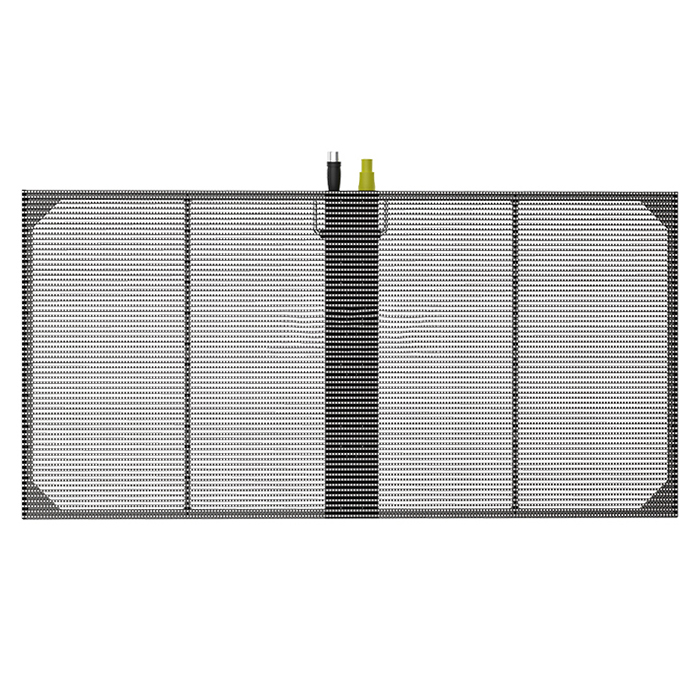
A lightweight LED curtain used as a transparent scenographic layer, letting singers and set changes remain visible while the stage carries a shifting light field.
Reference project. Client details, location and final project data are available on request.

- Application
- Stage & Live Events
- Format
- XLC Curtain Series
- Environment
- Opera stage, repertory production
- Site type
- Repertory opera stage
- Suggested viewing
- 10–35 m from the auditorium
- Service route
- Panel swap from the stage-left spares rail
The challenge
The production needed a light surface that could move between repertory dates without hiding the singers or rebuilding the set.
Why this format
An LED curtain was chosen for transparency, packing volume and repeatable rigging in a repertory house.
- Pixel pitch
- P37.5
- Transparency
- 63%
- Brightness
- 1,800 nits
- IP rating
- IP65
The approach
- Rigged the curtain upstage of the principal singing position.
- Built content as slow fields and silhouettes rather than literal scenery.
- Labelled strips and cues by act for repertory changeovers.
Result
The stage gains a moving light curtain without losing the performers. The house can reset the curtain between repertory productions.
Integration plan
The physical interface between the screen, the building and the service route decides how the installation performs after handover.
- Curtain hung from the house truss with fast locks.
- Control presets saved for each act.
- Spare strips kept at the stage-left rail.
Content and operation
A screen is only as useful as its daily routine. Content rhythm, brightness and spare parts are agreed before the first playlist goes live.
- Cue list follows the conductor and stage management.
- Transparency keeps the singers visible.
- Panel swaps happen between rehearsals.
What this study shows
Transparency keeps the performance, not the screen, in front.
Cue structure should follow stage management, not the media server.
A defined spare-strip rail shortens changeover.
Installation notes
The mounting and service route were agreed before the screen layout was fixed.
XLC Curtain Series specifications- Hang from standard truss or a top rail; panels connect with fast locks without tools
- Curve the strips into arcs, circles or waves before final tensioning
- Use the waterproof head and tail connectors for outdoor positions
- Label strips and driver sections by show or facade zone
Project views
Installation views and format details. Reference study.


Related studies
 Curtain
Stage & Live EventsTouring production, outdoor and arena datesReference project
Touring curtain backdrop
A lightweight LED curtain for a touring show, rolled by strip, packed by section and rigged from standard truss.
Read study Curtain
Stage & Live EventsOutdoor festival main stage, night programmeReference project
Festival main-stage curtain
A high LED curtain around a festival main-stage frame, rolled in by strip and rigged around the artist entrance.
Read studyPlan a project with this format
Share the site, viewing distance and target date. We will confirm whether the same approach applies to your building or venue.
Mon to Fri, 09:00 to 18:00 (GMT+8)